
Sinking Pool Deck or Soggy Yard in Fort Myers
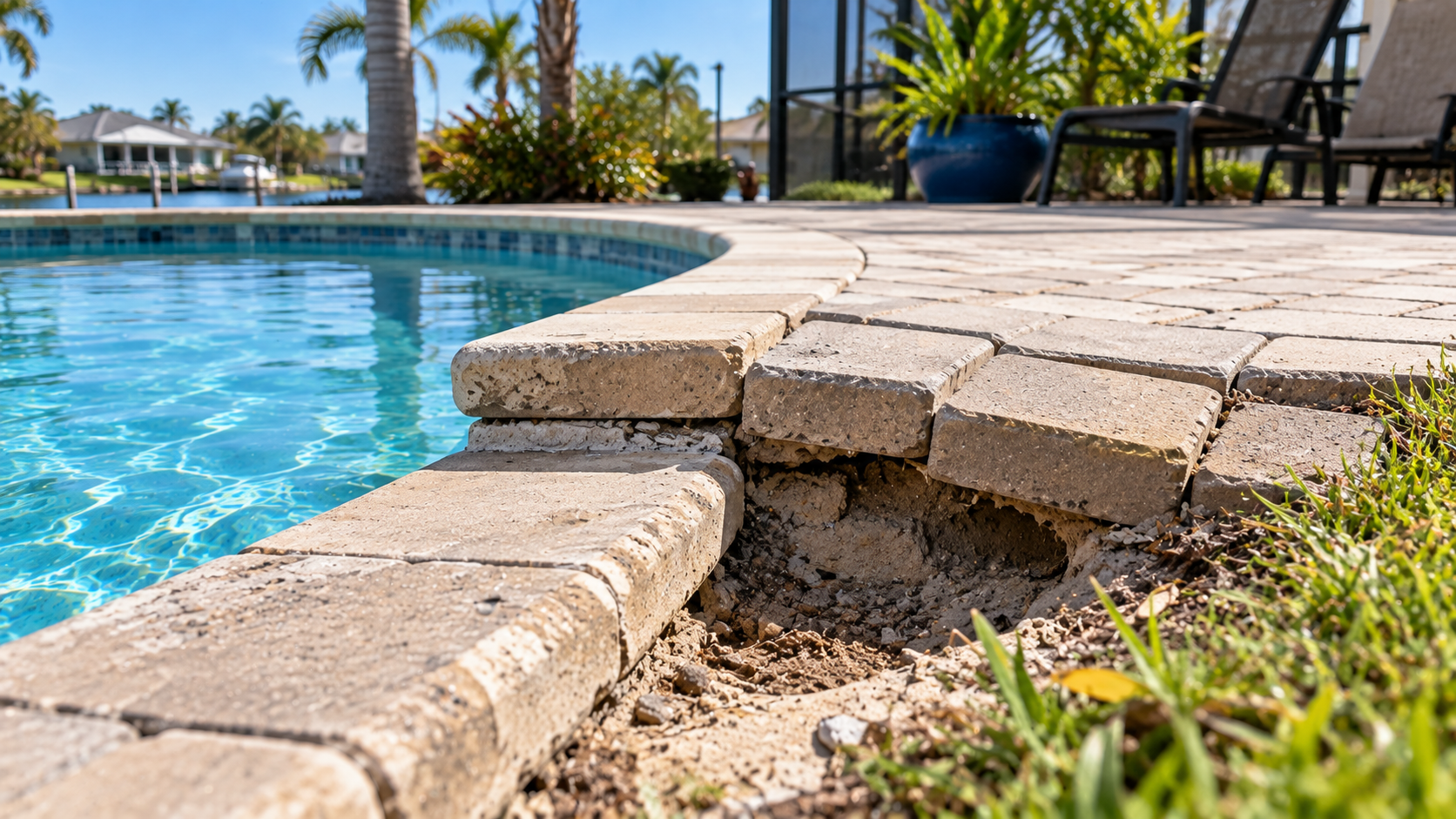
How Hidden Leaks Wash Out the Soil
A pool deck sinking in Fort Myers is easy to blame on settling or age. Sometimes that's true. However, a dip in the pavers or a patch of yard that never dries out can also point to a leak quietly washing the ground away.
At OG Pool Protection, we track down hidden pool leaks for homeowners in Fort Myers, Cape Coral, and across Southwest Florida. In sandy Gulf Coast soil, escaping pool water doesn't just disappear. It carries sand with it. Over time, that can leave empty pockets under your deck.
This guide explains how leaks cause sinking decks and soggy yards, how to tell a leak from ordinary settling, and what to do before the damage spreads.
How a Pool Leak Washes Out the Soil
Much of Southwest Florida sits on loose, sandy soil. It drains quickly, which is great after a summer downpour. On the other hand, it also moves easily when water flows through it.
Water Carries Sand Away
When a pool line or fitting leaks underground, the water follows the easiest path through the soil. A steady flow can slowly carry fine sand along with it, a process called erosion. That leaves gaps where solid ground used to be.
The Deck Loses Its Support
Pool decks and pavers rely on the soil underneath for support. Once voids form, the surface above has nothing to rest on. As a result, sections can dip, crack, or tilt toward the pool.
Why It Happens So Quietly
Sandy soil drains well, so leaking water rarely puddles on the surface. Instead, the damage builds out of sight. By the time the deck shifts, the leak may have been running for months.
Warning Signs Around the Deck and Yard
The ground around your pool often shows trouble before the pool itself does. Watch for these clues:
- Pavers that dip, rock, or separate near the pool edge
- New cracks in a concrete deck, especially near plumbing runs
- A gap opening between the deck and coping
- A patch of grass that stays greener or soggier than the rest
- Soft ground between the pool and the equipment pad
- Water loss beyond what a bucket test shows for evaporation
Here is a pattern we notice often. A homeowner re-levels a few sunken pavers, and six months later they've dropped again. When the same spot keeps sinking, something underneath is still moving.
The location of the damage is a useful clue too. Settling along the path between the pool and the equipment pad often points toward an underground plumbing line.
Not Every Sinking Deck Is a Leak
To be fair, decks settle for plenty of other reasons. Knowing the difference saves you from chasing the wrong problem.
Other Common Causes
- Poor compaction when the deck or pavers were first installed
- Heavy rain runoff pooling against the deck edge during storm season
- Tree roots pushing up or shifting nearby pavers
- Downspouts or irrigation soaking the same spot again and again
How to Tell the Difference
A leak usually comes with water loss you can measure. If the deck is sinking and the pool is losing more water than a bucket test explains, the two are likely connected. If the water level holds steady, the settling probably has another cause.
In short, the water level is your best tiebreaker.
What to Do First
If you suspect a leak behind a sinking deck, the order of your next steps matters.
- Run a bucket test. Compare the pool's water loss to a bucket of pool water on the steps over 24 hours.
- Note when the loss happens. Check whether the pool drops more with the pump running or resting.
- Photograph the damage. Mark where pavers have dropped or cracks have formed so you can track changes.
- Book leak detection before calling a deck contractor.
Don't Patch the Deck First
It's tempting to fill the voids or reset the pavers right away. But if the leak keeps running, it will wash out the new fill too. You'll end up paying for the same deck repair twice.
Find and stop the leak first. Then repair the deck on stable ground.
How OG Pool Protection Finds the Source
Our job is to pinpoint exactly where the water is escaping, without tearing up your deck to guess.
Pressure Testing the Plumbing
We isolate each underground line and pressurize it. A line that won't hold pressure tells us which run is leaking. That narrows the search right away.
Pinpointing the Break
Next, we use electronic listening equipment along the failing line to locate the break beneath the deck. That way, only a small, targeted section needs to be opened for repair.
Checking the Pool Itself
We also dye test fittings, skimmers, lights, and the shell. Not every leak sits under the deck, and we want to make sure nothing gets missed.
Once we find the source, you'll know exactly what needs repair and where. Then your deck can be fixed once, on solid ground.
Sinking Pool Deck FAQ
Can a pool leak cause my deck to sink?
Yes. In sandy Southwest Florida soil, water from an underground leak can carry sand away and leave voids under the deck. Without support, pavers and concrete can dip or crack.
How do I know if a leak is causing my deck to sink?
Compare the sinking with your pool's water loss. If the deck is settling and a bucket test shows more loss than evaporation, a leak is the likely cause.
Should I fix the deck or the leak first?
Find and fix the leak first. If the leak keeps running, it can wash out new fill and undo the deck repair.
Why is one patch of grass near my pool always wet?
A constantly soggy or extra green patch can mean water is escaping from an underground line nearby. Leak detection can confirm whether the pool is the source.
Which areas does OG Pool Protection serve?
OG Pool Protection serves Fort Myers, Cape Coral, Estero, and nearby Southwest Florida communities. Contact the team to confirm service for your address.
Book a Leak Detection Consultation
A sinking deck is more than a cosmetic problem when a leak is behind it. Every week the water keeps flowing, more soil washes away. Finding the leak early protects your deck, your yard, and your water bill.
OG Pool Protection pinpoints hidden pool leaks for homeowners across Fort Myers and Southwest Florida. Book a consultation today, and let our team find out what's happening beneath your deck.