
Signs Your Cape Coral Pool Has a Leak (And What to Do About It)
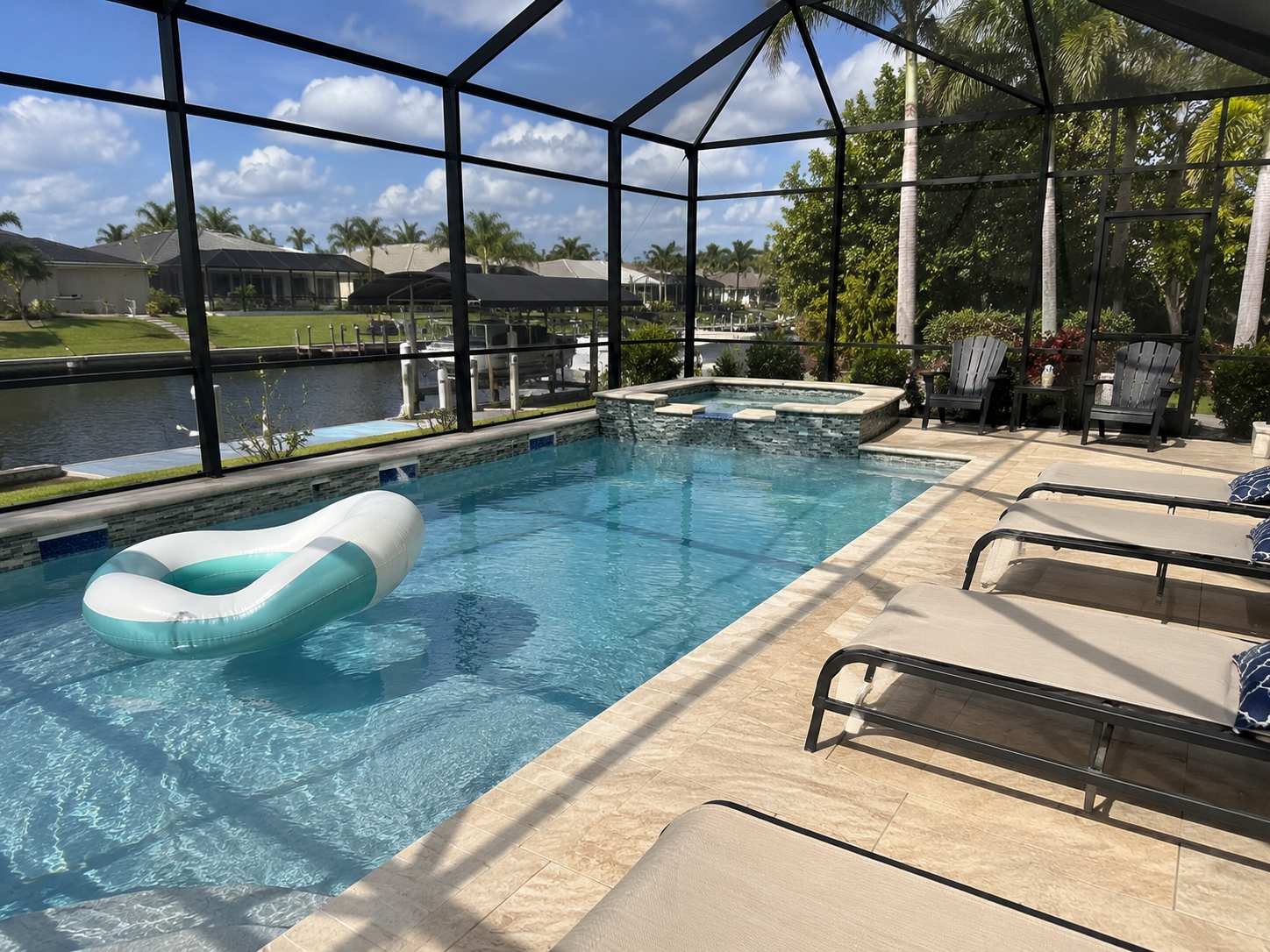
Cape Coral has more canal-front and in-ground pools per capita than almost anywhere else in Southwest Florida, and that means more pools quietly losing water without their owners noticing. OG Pool Protection is based right here in Cape Coral, and after locating thousands of leaks across Lee County, the same warning signs show up again and again before homeowners finally call.
This guide covers what actually separates a real leak from normal evaporation, the signs worth paying attention to, and what happens once you book an inspection.
Evaporation vs. an Actual Leak
Every pool loses some water to evaporation. In Southwest Florida summers, that is usually around a quarter inch per day, sometimes more during windy or low-humidity stretches. The problem starts when water loss goes well beyond that number.
If you are topping off your pool more than once or twice a week, or your water bill has jumped without an obvious explanation, evaporation alone is unlikely to be the cause. That is when a proper leak detection becomes worth scheduling.
The Bucket Test
Before calling anyone, a simple bucket test can help confirm whether you are dealing with real water loss.
- Fill a bucket with pool water and set it on the second step
- Mark the water line inside the bucket and outside on the pool wall
- Let it sit for 24 hours with the pump running normally
- Compare the two marks
If the pool's water line dropped noticeably more than the bucket's, that points to a leak rather than evaporation. It will not tell you where the leak is, but it confirms whether one exists.
Common Warning Signs Cape Coral Homeowners Miss
Some leaks announce themselves. Most do not.
- A water line that keeps dropping even after refilling, week after week
- Wet spots or soft ground near the pool deck or equipment pad, especially odd since Cape Coral's sandy soil usually drains fast
- Cracks in the pool deck or coping that seem to be widening over time
- Air bubbles in the return jets or a pump that seems to be working harder than usual
- A chemical bill that keeps climbing because fresh water dilutes the chemistry every time the pool gets topped off
- Rising water bills with no other explanation for the increase
Any one of these on its own might mean nothing. Two or three together usually mean it is time for a real inspection.
Where Cape Coral Pools Typically Leak
Cape Coral's canal system and sandy soil create a specific set of pressure points that show up more here than in other parts of Southwest Florida.
Return Lines and Skimmer Throats
Return lines run underground from the equipment pad to the pool shell, and skimmer throats sit right at the water's edge, where hairline cracks are common as a pool ages. Both are frequent culprits, and neither is visible without pressure testing.
Light Niches and Fittings
Every fitting that penetrates the pool shell, from lights to jets to drains, is a potential failure point. Dye testing is the only reliable way to confirm whether one of these is the source.
Structural Shell Cracks
Less common, but not rare in older Cape Coral pools built before more current construction standards. A structural crack usually requires diving the pool to locate visually, since pressure testing alone will not always catch it.
What a Real Leak Detection Involves
A proper leak detection is not guesswork. It starts with an intake call to go over symptoms, water loss rate, and any pressure issues, followed by an in-person visit.
From there, the process usually includes:
- Pressure testing every accessible plumbing line
- Static and dye testing at each shell penetration
- A full underwater dive inspection of lights, fittings, and hairline cracks
- LeakTronics acoustic testing for leaks that pressure testing alone cannot isolate
Most residential inspections take 90 minutes to three hours, with plumbing pressure testing usually taking the longest stretch. Once the source is confirmed, you get a written, photographed report you can hand directly to a contractor, your insurer, or a realtor if the pool is part of a sale.
Why DIY Leak Chasing Rarely Works
It is tempting to patch a suspected crack or replace a fitting based on a guess, but that approach usually costs more in the long run. Fixing the wrong spot means the water loss continues, the chemical costs keep climbing, and the actual leak eventually causes more damage the longer it goes unaddressed.
A structured detection process isolates the real source before anything gets repaired, which is the difference between a permanent fix and a repeat service call six months later.
Frequently Asked Questions
How much water loss is normal for a Cape Coral pool?
Roughly a quarter inch per day from evaporation alone during summer months. Consistent loss beyond that, especially paired with rising water or chemical bills, usually points to a leak rather than normal evaporation.
How long does a leak detection inspection take?
Most residential inspections take 90 minutes to three hours, depending on pool size and plumbing complexity. Pressure testing the plumbing typically takes the longest portion of the visit.
Can a small leak really cause serious damage?
Yes. A slow leak near the equipment pad or deck can erode soil beneath the structure over time, leading to settling, cracked decking, or damage that costs significantly more to repair than the original leak would have.
Do you serve areas outside Cape Coral?
Yes. OG Pool Protection covers Lee, Collier, Charlotte, and Hendry counties, including Fort Myers, Estero, Bonita Springs, Sanibel Island, Lehigh Acres, Alva, and Marco Island.
What happens after the leak is found?
You receive a written, photographed report detailing exactly what was found and where. From there, you can move forward with a contractor of your choice, or OG Pool Protection can connect you with trusted local pros.
Think your pool might be losing more than evaporation? Book an inspection with OG Pool Protection and get a straight answer backed by proof, not guesswork.