
Pool Leak Detection in Estero, FL: Why the Water Table Changes Everything
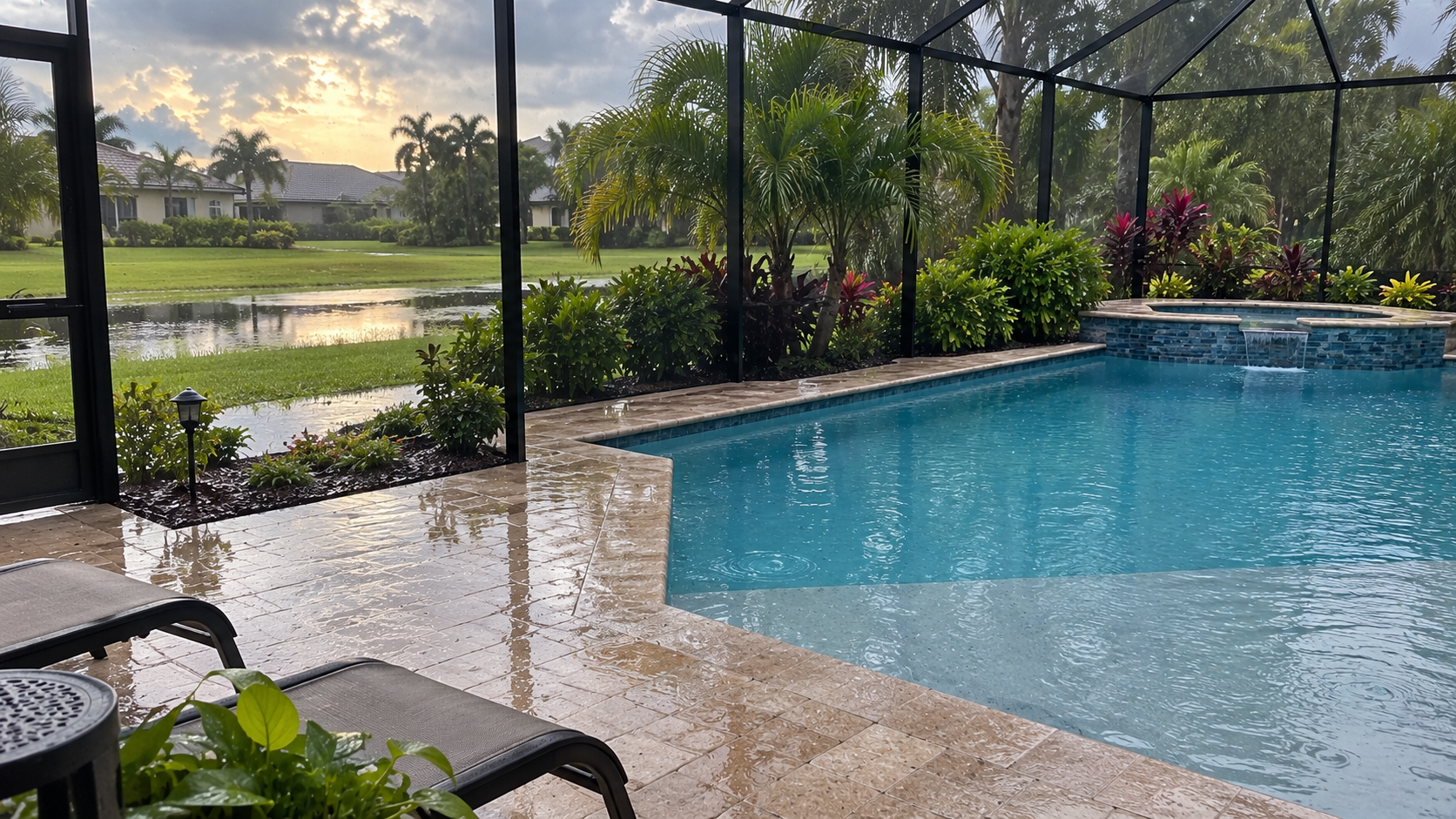
Estero sits at an interesting intersection of Southwest Florida's pool market. It is one of the fastest-growing communities in Lee County, with a housing stock that skews toward newer construction, master-planned communities, and properties where the pool is not a backyard amenity so much as a central feature of the home.
That newer construction detail matters when it comes to leaks. A pool built in 2018 or 2022 should not be losing water. But Estero pools leak regularly, and the reason is more specific to this area than most homeowners realize.
OG Pool Protection serves Estero as part of its Southwest Florida coverage area, with over 10 years of leak detection experience and more than 3,000 leaks located across Lee, Collier, Charlotte, and Hendry counties. This post covers what makes Estero pools specifically vulnerable to leaks, how the diagnostic process works here, and what a written inspection report means for you as a homeowner.
The Water Table Problem in Estero
Estero is low-lying. The community borders Estero Bay and sits on terrain that in many areas sits only a few feet above sea level. That geography creates a water table situation that affects pool plumbing in ways homeowners in inland markets never encounter.
When the water table is high, underground pool plumbing is essentially submerged in saturated soil. Fittings and joints that are dry and stable under normal conditions are under constant hydrostatic pressure when the water table rises after heavy rain. Estero gets significant summer rainfall, sometimes several inches in a single storm event, and the ground here does not drain fast.
That repeated cycle of saturation and drying puts mechanical stress on underground plumbing joints. Fittings that were glued and set correctly at installation begin to see micro-movement over years of this cycle. Eventually a fitting that looked fine at the five-year inspection has a small separation that grows into a real water loss.
The pattern shows up consistently in Estero pools: homeowners who notice their auto-fill running more than usual in late summer, after the rainy season has peaked and the water table is highest. The leak was likely developing before that, but the combination of high ground moisture masking the wet spots and faster evaporation in summer heat means homeowners often do not connect the dots until the water bill arrives in August or September.
What Makes Estero Pool Leaks Harder to Find Without Professional Equipment
In most markets, a pool leak eventually produces a visible wet spot somewhere. Water migrating underground eventually surfaces somewhere lower than its source.
In Estero, the soil is often already saturated. A leaking return line does not necessarily produce a distinct wet patch because the surrounding soil is already holding significant moisture from rain and irrigation. The leak blends into the background.
This is why the OG Method works the way it does here. We do not look for wet spots. We test the plumbing systematically so that a failing line reveals itself through pressure loss, not through surface evidence that may never appear in Estero's soil conditions.
The four-step process we use on every Estero inspection:
Intake and symptom review. We start with what you have observed: how fast the water level drops, whether the auto-fill runs constantly, whether air bubbles have appeared in the return jets, whether there is any soft ground near the equipment pad. Each symptom narrows the starting point before we touch the pool.
Pressure testing each line independently. Every accessible plumbing line is isolated and pressurized. Return lines, suction lines, and the main drain line are each tested as separate segments. A line that holds pressure is intact. A line that loses pressure has a breach. This step tells us which line to focus on before any acoustic equipment or dye is deployed.
Hydrophone and acoustic testing. For lines that lose pressure, we use LeakTronics hydrophone equipment to listen along the pipe route for the sound of water escaping under pressure. In Estero's sandy, water-saturated soil, the acoustic signal from a pressurized leak is often quite clear despite the surrounding moisture. We zero in on the specific location along the failing line.
Dive and dye inspection. We dive the pool for every inspection. This is not optional and it is not just for pools with obvious structural problems. Light niches, return fittings, main drain covers, skimmer throats, and hairline cracks in the shell are all things that can only be confirmed underwater. Dye released near suspected penetrations confirms whether there is active draw from a leak point.
The result is a written, photographed report that documents exactly what was found, where it is, and what addressing it will require. That report is yours to hand to a contractor, insurer, or HOA without needing us back on-site to explain what we found.
The Estero HOA and New Construction Dynamic
A significant portion of Estero's pool stock exists within master-planned communities and HOA neighborhoods. Coconut Point, Wildcat Run, Estero Country Club, The Reserve at Estero, and dozens of other communities have pools that exist within HOA frameworks with specific rules about access, contractors, and documentation.
This creates a dynamic that OG Pool Protection deals with regularly in Estero. When a pool within an HOA shows signs of leaking, the question of responsibility and documentation becomes important quickly. Is the leak in the homeowner's plumbing or in shared infrastructure? Has the pool been maintained according to HOA standards? What does the written inspection report say?
Our reports are structured specifically to answer those questions cleanly. Every finding is documented with photographs, pressure readings, and location descriptions precise enough for a contractor to locate the leak without guesswork. Insurers, HOA boards, and remediation contractors have all worked from our Estero reports.
For homeowners in Estero communities considering a renovation or preparing a home for sale, the pool inspection report also serves a specific function: it gives the buyer or the renovation contractor a clear-eyed picture of the pool's current condition before any decisions are made about resurfacing, equipment upgrades, or structural repairs.
Auto-Fill Systems Mask Estero Leaks Longer Than Homeowners Realize
Most newer homes in Estero have auto-fill systems connected to their pools. These systems maintain the pool water level automatically, topping off whenever the level drops below a set point.
Auto-fill systems are convenient. They are also the reason many Estero pool leaks go unnoticed for months. When the auto-fill is keeping the pool level constant, the homeowner has no visible signal that water is escaping. The only indication is the water bill, which climbs gradually as the auto-fill compensates for ongoing loss.
A pool losing a half inch of water per day to a plumbing leak, masked by auto-fill, can run that way for an entire season before anyone notices. By the time the water bill triggers an inspection call, the leak has been running for long enough that the surrounding soil may have seen significant water infiltration.
The diagnostic step that resolves this is turning off the auto-fill before calling OG Pool Protection. If you suspect a leak, shut off the auto-fill valve and watch the pool level for 24 hours with no filling. Compare the level drop to a bucket of pool water set on a pool step at the same starting level. If the pool drops meaningfully more than the bucket, you have a real leak rather than evaporation. That information is useful to us before the inspection and helps confirm the presence of a leak before we begin testing.
What Estero Pool Leaks Cost When They Are Not Caught
A pool leaking a quarter inch per day loses roughly 500 gallons per week on a standard 20,000-gallon residential pool. At Estero water rates, that is meaningful but not alarming as a line item. The problem is not the water cost alone.
Continuous water loss means continuous chemical dilution. Every gallon lost takes chlorine, stabilizer, and pH-adjustment chemicals with it. A leaking pool requires meaningfully more chemical input to stay balanced than an intact one. For Estero homeowners who are trying to understand why their chemical costs have drifted upward without an obvious cause, a slow leak is frequently the answer.
More significant is the soil impact over time. A return line or suction line that has been leaking into the saturated soil around an Estero pool for months can eventually erode the material beneath pool deck sections, leading to settling or cracking that becomes a separate repair project. Catching a plumbing leak early costs the price of an inspection. Catching it late, after the deck has moved, costs the inspection plus the structural repair.
FAQ: Pool Leak Detection in Estero, FL
My pool has an auto-fill and the level always looks fine. How do I know if it is actually leaking?
Turn off the auto-fill valve for 24 hours and watch the level. Run the bucket test alongside it: fill a bucket to the pool's water line, set it on a step, mark both, and compare after 24 hours. If the pool drops more than the bucket, a leak is compensating for what the auto-fill would normally replace. In Estero, auto-fill systems are the most common reason homeowners discover leaks later than they otherwise would.
My pool was built in 2019. Is it too new to have a leak?
No. Newer pools in Estero are not immune to leaks, and the high water table environment here accelerates fitting stress in ways that are not present in drier or less low-lying markets. The most common sources in newer Estero pools are return line fitting separations and skimmer throat issues, both of which can develop within the first several years in Southwest Florida conditions.
Does OG Pool Protection serve Estero HOA and community pools, or only residential?
Both. OG Pool Protection works with residential homeowners, HOA boards, property managers, and commercial properties across Estero and the surrounding Lee County communities. Our written reports are formatted to meet the documentation needs of HOA review processes and insurance claims.
What does the written report include?
Every OG Pool Protection inspection report is a photographed, annotated PDF documenting what was found, where it is located on the pool, the pressure readings from each tested line, and recommendations for what the repair requires. The report is structured so that a remediation contractor can locate and address the identified leak without needing us back on-site to explain findings.
How soon can you schedule an Estero inspection?
OG Pool Protection offers same-week scheduling across Estero and the surrounding Southwest Florida area. Call (239) 202-7555 or book online through our contact page to confirm availability for your address.
Do you find leaks in pool equipment pads, or only in the plumbing and shell?
Both. Our inspection includes the equipment pad connections, including pump and filter unions, heater inlet and outlet points, and valve connections, in addition to the underground plumbing lines and the pool shell. Equipment pad leaks are sometimes easier to spot visually, but they can still be obscured by surrounding moisture in Estero's climate and are always part of a full OG inspection.
Ready for a Straight Answer on Your Estero Pool?
Guessing whether your pool is leaking, and if so where, costs more in chemicals, water, and potential structural damage than a professional inspection. OG Pool Protection brings over 10 years of Southwest Florida leak detection experience, LeakTronics acoustic technology, and a written report you can actually use.
Call (239) 202-7555 or contact us to book your Estero pool inspection. Same-week scheduling available.