
Black Algae Removal Guide: What's Actually Growing in Your Bonita Springs Pool
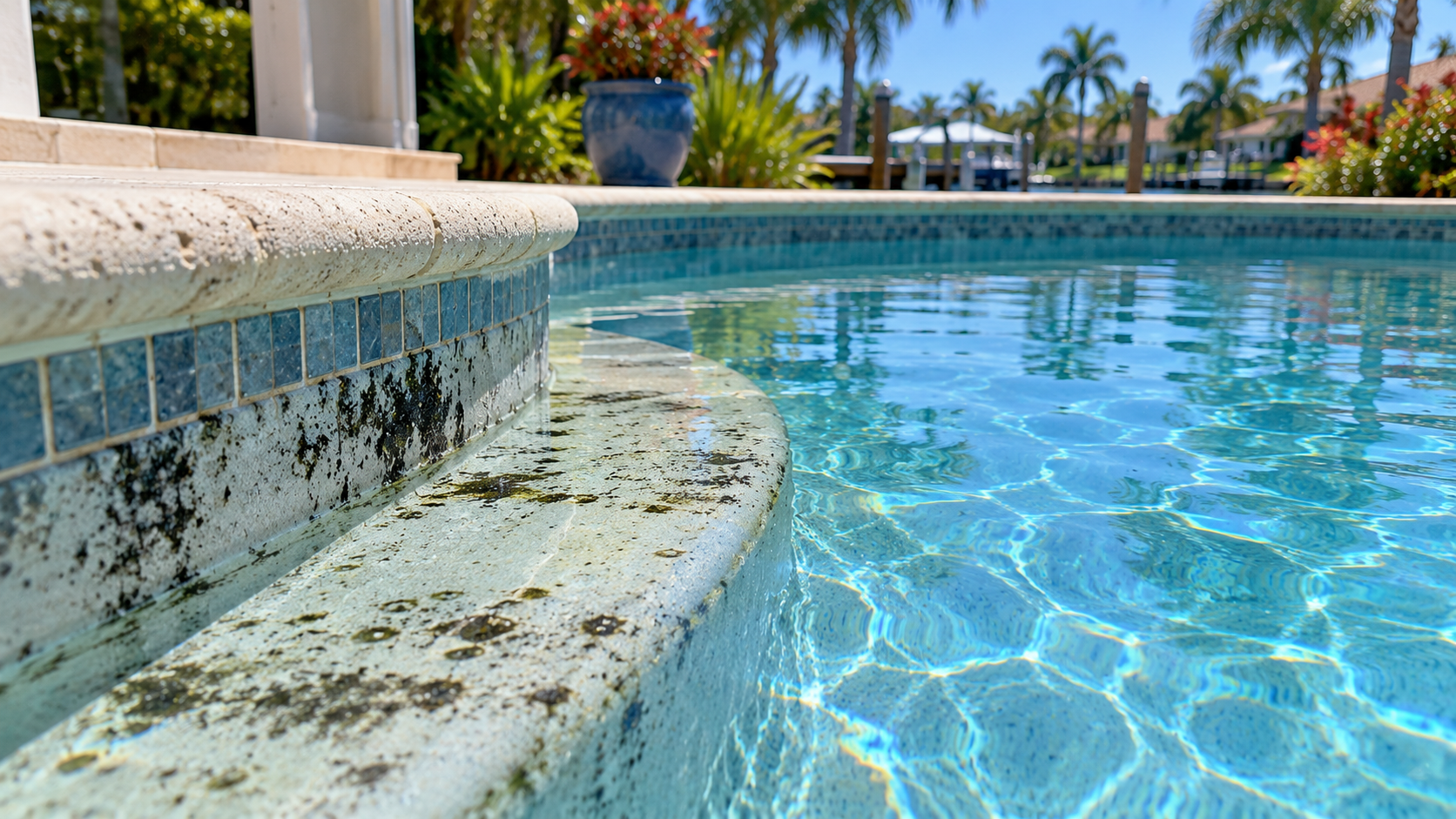
If you have seen dark bluish-green spots on your pool floor or walls that will not brush off no matter how much you scrub, you are probably dealing with black algae. It is one of the more stubborn pool problems Southwest Florida homeowners encounter, and it is more complicated than the green algae blooms that turn a pool cloudy overnight. OG Pool Protection serves Bonita Springs and surrounding Lee and Collier County communities with targeted black algae and calcium removal treatment, and this guide covers what black algae actually is, why it is so persistent, and what effective treatment looks like.
What Black Algae Actually Is
Despite the name, black algae is not true algae in the same sense as the green variety. It is a cyanobacteria, a photosynthetic microorganism that behaves more like a plant than a typical pool contaminant. That distinction matters because it explains why black algae responds so differently to standard pool treatments.
Black algae develops a protective structure that makes it uniquely resistant to chemical treatment. The organism anchors itself into porous surfaces like plaster, gunite, and grout lines using root-like structures called holdfasts. On the surface, it grows in colonies that develop a waxy, protective outer layer that acts as a barrier against chlorine and other sanitizers. That outer layer is why you can pour shock directly onto a black algae spot and watch it bounce right off without affecting the colony underneath.
The dark color comes from the pigment the organism uses to protect itself from ultraviolet light. In other words, black algae has evolved specifically to survive in a sun-exposed aquatic environment, which describes a Bonita Springs pool in September almost perfectly.
Why Bonita Springs Pools Are Particularly Vulnerable
Southwest Florida's climate creates ideal conditions for black algae to establish and thrive.
Year-round warmth. Black algae, like most cyanobacteria, grows most aggressively in warm water. Bonita Springs pool temperatures stay in the 80s for the majority of the year, which is the optimal growth range. There is no cold season to knock back an established colony the way northern climates provide.
Intense UV exposure. The same sun that makes Southwest Florida a desirable place to live is the same UV intensity that black algae's protective pigmentation evolved to survive. The organism is well-adapted to the light conditions in a Bonita Springs backyard.
High bather load and splashout. Short-term rental properties and vacation homes in the Bonita Springs area see high seasonal bather loads that introduce contaminants and can disrupt chemical balance. Black algae spores can be introduced to a pool through swimwear that has been in natural bodies of water, through contaminated equipment, or through the environment.
Porous plaster and grout surfaces. Many pools in the Bonita Springs area are in the 10 to 20 year range, which means the original plaster or pebble finish has developed micro-porosity that provides purchase points for black algae's holdfasts. A fresh plaster surface is harder for algae to anchor into than an older, more textured one.
Chemical balance disruptions. Southwest Florida's rainy season, which runs from June through September, dumps significant rainfall into pools that dilutes chemical balance. A pool that is repeatedly hit with heavy rain and not consistently monitored is more vulnerable to algae establishment during those months.
Identifying Black Algae vs. Other Pool Problems
Correctly identifying what you are dealing with matters before you start treatment.
Black algae appears as dark bluish-green or black spots, usually circular, ranging from the size of a pencil eraser to a quarter or larger. The spots are rough to the touch and firmly attached to the surface. They do not wipe or brush off easily. They appear most commonly on rough or textured surfaces including plaster, gunite, grout lines between tiles, and steps.
Green algae clouds the water and coats surfaces in a slippery green film that brushes off relatively easily. It responds quickly to shock treatment and regular brushing when caught early. It is the most common algae type but far easier to address than black algae.
Yellow or mustard algae is a yellow-green powdery coating that often appears on shaded pool walls and is frequently mistaken for dirt or pollen. It is more resistant to chlorine than green algae but less so than black algae, and it does not anchor into surfaces the way black algae does.
Calcium deposits can look similar to algae at first glance. Calcium scaling appears as white or grayish deposits on tile lines and plaster surfaces, particularly at the waterline. It is a mineral deposit rather than an organism and requires a different treatment approach involving acid washing or specialized calcium removal products rather than algae treatment.
OG Pool Protection handles both black algae removal and calcium removal because the two are frequently confused and occasionally occur together on the same pool surface.
Why Standard Pool Treatment Does Not Work on Black Algae
Most pool owners try the logical first steps when they spot black algae: brush the spots aggressively, shock the pool heavily, and add algaecide. These steps are not wrong, but they are rarely sufficient on their own, and without the right approach they produce only temporary results.
Brushing without penetrating the protective layer disrupts the waxy surface of the colony without reaching the holdfasts anchored in the plaster below. The spots may lighten temporarily and then return as the colony regrows from the undamaged root structure.
Standard chlorine shock at normal concentrations cannot penetrate the protective outer layer of an established black algae colony. Even at significantly elevated concentrations, the outer layer provides meaningful protection for the organism underneath. This is why black algae spots can survive in a pool that has adequate sanitizer levels for general maintenance.
Copper-based algaecides are more effective against black algae than standard quaternary ammonia products and are an important part of a treatment protocol. However, they work best as part of a comprehensive approach rather than as a standalone treatment.
Effective black algae treatment requires physically breaking through the protective layer to expose the organism underneath, then applying chemical treatment at concentrations high enough to reach and kill the anchored holdfasts.
What Professional Black Algae Removal Involves
The OG Pool Protection approach to black algae removal combines physical disruption, targeted chemical treatment, and follow-up to confirm the colony is fully addressed rather than temporarily suppressed.
Surface preparation. The pool is brushed aggressively with a stainless steel or wire brush specifically on the affected spots. This is different from a standard algae brush used for green algae. The goal is to physically break through the waxy outer layer of each colony to expose the organism underneath to chemical treatment. This step requires firm, focused work on each spot rather than a general brush of the pool surface.
Direct chemical application. After brushing opens the surface, concentrated treatment is applied directly to each affected spot. Trichlor tablets are commonly broken in half and rubbed directly on the exposed colony, which delivers a high concentration of chlorine exactly where it needs to go. This approach is more effective than raising the general pool chlorine level because it bypasses the dilution that occurs in the water column.
Shock treatment. The pool is shocked to a significantly elevated chlorine concentration to address any free-floating spores and to treat the general water column while the direct spot treatments work.
Copper-based algaecide. A copper-based algaecide is added to the water to address any algae that survived the shock and direct treatment.
Filtration. The filter runs continuously through the treatment period to remove dead algae cells and maintain water clarity. The filter is cleaned after treatment to prevent reintroduction.
Follow-up assessment. The spots are monitored over the days following treatment to confirm they are not regrowing. Black algae that reappears in the same spot within a week or two indicates the holdfasts were not fully reached and the treatment needs to be repeated.
When the Surface Itself Is the Problem
In pools where black algae has been present for a long time or where the plaster surface is heavily pitted and porous, chemical treatment may not fully resolve the problem because the holdfasts are too deeply embedded in the surface material.
In these situations, the only complete solution is resurfacing. A fresh plaster or pebble surface removes the colonized material entirely and eliminates the anchoring points the algae used. This is more involved than chemical treatment but produces a complete resolution for pools where repeated chemical approaches have not held.
OG Pool Protection will tell you honestly if the surface condition of your Bonita Springs pool is a factor in why black algae keeps coming back, and will connect you with trusted local pool contractors when resurfacing is the right recommendation.
Calcium Removal: Often Needed Alongside Black Algae Treatment
Bonita Springs and the broader Southwest Florida area have hard water, and calcium scaling is a common companion to black algae in pools that have not had regular waterline tile cleaning. The two look different up close but both require professional treatment and both affect the same pool surfaces.
Calcium deposits form when calcium carbonate in the water precipitates out onto tile, plaster, and coping surfaces, typically at the waterline where evaporation is most concentrated. Left untreated, the deposits build up and harden into a scale that is difficult to remove without acid washing or specialized tools.
OG Pool Protection handles calcium removal using targeted methods that protect the pool's finish while restoring the tile and plaster surface. If your pool has both black algae spots and calcium deposits, addressing both in the same service visit is more efficient than treating them separately.
Preventing Black Algae From Coming Back
After successful treatment, a few practices significantly reduce the risk of reestablishment:
Maintain consistent water chemistry. Chlorine levels that fall below 1 ppm allow algae to establish. In Bonita Springs, where summer heat and rainy season rainfall create chemical balance challenges, monitoring more frequently during June through September reduces the risk window.
Brush the pool regularly. A weekly brushing of the pool walls, floor, and step edges disrupts any early-stage algae before it can establish a protective layer. This is particularly important for pools with plaster or gunite surfaces.
Rinse swimwear that has been in natural bodies of water. Black algae spores are introduced to pools most commonly through contaminated swimwear. Rinsing and drying swimwear before reusing it in the pool eliminates one of the primary reintroduction pathways.
Clean the filter after any algae treatment. Dead algae cells that end up in the filter can reintroduce contamination if the filter is not cleaned promptly after treatment.
Address surface porosity. If your pool's plaster is aging and rough, a resurfacing consultation is worth having before you spend another season battling recurring black algae.
FAQ
Is black algae dangerous to swim in?
Black algae in a pool does not pose a direct health risk the way contaminated water from other sources might, but swimming in a pool with active black algae growth is not ideal. The organism can harbor other bacteria, and a pool with visible black algae growth typically has compromised chemical balance. Treatment and restoration to proper chemistry should come before normal use resumes.
How long does black algae removal take?
A professional black algae treatment visit typically takes a few hours. The full treatment process, including the shock period and follow-up assessment, plays out over several days as the pool chemistry works through the treatment cycle. OG Pool Protection provides guidance on when it is appropriate to resume normal swimming after treatment.
Can I treat black algae myself?
You can attempt treatment with the right materials, including a stainless steel brush, trichlor tablets for direct spot treatment, a copper-based algaecide, and pool shock. The process requires significant physical scrubbing and careful application of concentrated chemical directly to each spot. For established infestations or recurring black algae, professional treatment is more thorough and more likely to produce a lasting result.
Why does black algae keep coming back in my Bonita Springs pool?
Recurring black algae most commonly indicates that the holdfasts were not fully eliminated during the initial treatment, that spores are being reintroduced through swimwear or equipment, or that the pool's plaster surface has become sufficiently porous that chemical treatment cannot reach deep enough to eliminate the anchoring structures. Professional assessment helps determine which factor is driving the recurrence.
Does OG Pool Protection serve Bonita Springs for black algae removal?
Yes. Bonita Springs is within our regular Southwest Florida service area. OG Pool Protection serves Lee and Collier County communities including Bonita Springs, Estero, Cape Coral, Fort Myers, Naples, Sanibel Island, and Marco Island. Call (239) 202-7555 or book an appointment online.
Black Algae in Your Bonita Springs Pool? OG Pool Protection Can Help.
OG Pool Protection provides targeted black algae and calcium removal for residential pools throughout Bonita Springs and Southwest Florida. Owner-operated, bilingual, and backed by 10+ years of pool service experience in Lee and Collier County. Call (239) 202-7555 or book an inspection online.